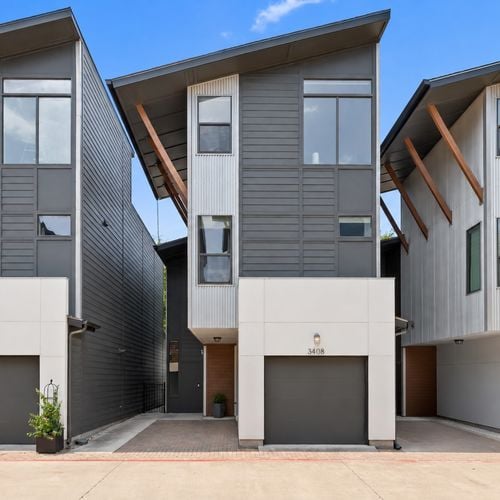


Moving to Austin isn't one housing decision.
It's a collection of trade-offs.
How much commute matters.
How much space matters.
Whether you want newer construction.
How you feel about property taxes.
Whether you prefer central Austin or would trade distance for lot size and newer housing.
Those questions matter more than any list of Austin's “10 best neighborhoods.”

Before buying a home in Austin, understand that the region contains several distinct housing markets.
Austin proper generally commands a premium for centrality, while parts of Williamson and Hays counties can offer newer homes or additional space at different price points.
Property taxes, commute patterns, HOA/MUD/PID obligations and new-construction competition can materially change the economics of two similarly priced homes.
Start With Your Daily Life, Not a Neighborhood List
We usually wouldn't begin a relocation conversation with:
“Which neighborhood do you like?”
We'd begin with:
- Where will you work?
- How often do you commute?
- What is your comfortable monthly payment?
- How long do you expect to own the property?
- How much lot do you want?
- Newer home or established neighborhood?
- How important is proximity to central Austin?
Those answers eliminate a surprising amount of the map.
Austin Proper vs. the Suburbs
The biggest initial decision is often centrality versus space/value.
Austin proper gives buyers access to established neighborhoods and shorter travel distances to many employment and entertainment centers.
Williamson County includes markets such as:
- Cedar Park
- Leander
- Round Rock
- Georgetown
Hays County includes:
- Buda
- Kyle
- Dripping Springs
These aren't substitutes for one another.
A buyer prioritizing a larger newer home may make a very different decision from someone who values proximity to downtown.
Don't Compare Prices Without Comparing Taxes
A $600,000 home in one Austin-area location does not necessarily cost the same each month as a $600,000 home somewhere else.
Property-tax obligations can vary because of:
- City jurisdiction
- County
- School district
- Municipal Utility District
- Public Improvement District
- Other taxing entities
HOA costs can also vary.
Purchase price alone is an incomplete affordability metric.
Understand MUDs and PIDs
Relocating buyers frequently encounter MUD and PID terminology for the first time in Central Texas.
A Municipal Utility District can provide infrastructure and services to communities and can levy taxes to support those obligations.
Public Improvement District structures can create additional assessments.
Neither automatically makes a neighborhood undesirable.
They simply need to be understood before comparing costs.
New Construction Changes the Austin Resale Market
Builders may compete using:
- Mortgage-rate incentives
- Closing-cost assistance
- Design upgrades
- Price reductions
- Inventory-home incentives
That affects resale sellers too.
If a three-year-old resale home is competing with a builder offering an attractive financing package nearby, compare the effective economics, not simply the list prices.
Understand Austin's Current Market Before Making an Offer
The current market gives relocating buyers considerably more breathing room than Austin did during the pandemic.
Across Travis, Williamson and Hays counties, there were approximately 4.8 months of supply as of August 17, and approximately 58% of active listings had experienced a price reduction.
At the same time, year-to-date sales were up 4.6%.
So yes, buyers have negotiating leverage.
But assuming every seller is desperate would be a mistake.
Research the Property, Not Just the House
Depending on the property, buyers may need to investigate:
- Floodplain information
- Permits
- Planned roadway projects
- Utility districts
- Tax jurisdictions
- HOA documents
- Nearby development
- Zoning
The attractive kitchen is only one part of the purchase.
What Does Austin Housing Cost?
There isn't one useful “Austin price.”
The three-county median was approximately $435,000 YTD through mid-August, but that combines an enormous variety of properties and locations.
That is why geographic labels matter.
Frequently Asked Questions
Is Austin still expensive?
Relative to many Texas markets, portions of Austin remain expensive, particularly central locations. The post-2022 correction has improved purchasing options, while surrounding communities provide a broad range of price points.
Should I buy in Austin or a suburb?
It depends primarily on commute, housing preference, budget, taxes and how you spend your time.
Is new construction a better deal?
Sometimes. Builder incentives can materially affect financing economics, while resale homes may offer established locations, landscaping and upgrades.
How long should I rent before buying after moving?
There's no mandatory period. Renting can be useful when you're uncertain about location or employment. Buyers who already understand their priorities may not need that intermediate step.
Our Take
Don't move to Austin by choosing a neighborhood from a ranking.
Choose based on the life you're actually going to live here.
Then evaluate the individual houses, tax structures and economics inside those areas.
Check out this article next