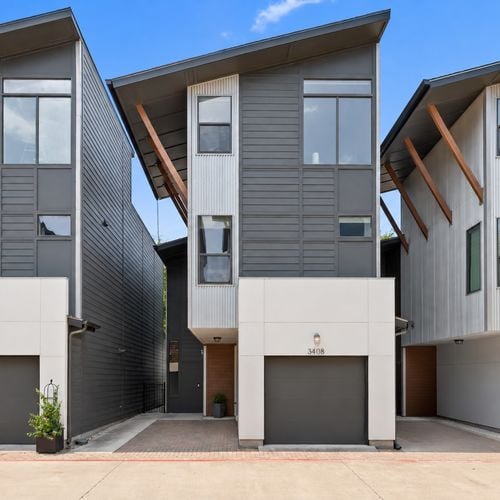


Moving to Austin is not one housing decision. It is a set of tradeoffs: how much your commute matters, how much space you want, whether you prefer a newer home or an established street, and how you feel about property taxes. Those answers tell you more than any list of "best neighborhoods" ever will.
The Austin area is really several housing markets side by side. Central Austin usually costs more for the location, while parts of Williamson and Hays counties can offer newer homes or more space at different price points. Taxes, commute patterns, HOA dues, MUD or PID obligations and builder competition can change the real cost of two homes that carry the same list price.

Start with your daily life, not a neighborhood list
We rarely open a relocation conversation by asking which neighborhood you like. We start here:
- Where will you work, and how often will you commute?
- What monthly payment feels comfortable?
- How long do you expect to own the home?
- How much yard or lot do you want?
- Newer construction or an established neighborhood?
- How important is being close to central Austin?
Those answers cross a surprising amount of the map off quickly. If you want to see how we turn them into a plan, our Austin buyer guide walks through the process, and what to budget before you tour covers the money side of a move.
Central Austin or the surrounding cities
The first big choice is often location versus space. Austin proper offers established neighborhoods and shorter drives to many job and entertainment centers. Close-in options include Downtown Austin, East Austin, South Austin and West Austin.
West of the city, Bee Cave and Lakeway sit along the Lake Travis corridor. In Hays County, Dripping Springs offers Hill Country space, and Buda and Kyle are along I-35 to the south. In Williamson County, Cedar Park, Leander, Round Rock and Georgetown are common stops on a north side search.
These areas are not interchangeable. Someone who wants a larger, newer home may land somewhere very different from someone who wants to be minutes from downtown. You can compare all of the areas we cover on our Explore Areas page.
Taxes are part of the price
A $600,000 home in one part of the Austin area does not necessarily cost the same each month as a $600,000 home somewhere else. The property tax bill depends on every taxing unit that covers the address, which can include:
- The city, if the home is inside city limits
- The county
- The school district
- A Municipal Utility District (MUD)
- A Public Improvement District (PID) assessment
- Other special districts, such as an emergency services district
HOA dues vary too. The list price alone is an incomplete way to measure what a home will cost you. We break down the full payment in Austin property taxes, insurance and your monthly payment.
MUDs and PIDs in plain terms
Many people moving to Central Texas run into MUDs and PIDs for the first time. A MUD is a local district that can build and run water, sewer and drainage service for an area, and it can levy a property tax to pay for that work. A PID lets a city or county fund improvements for a defined area through an assessment on the properties inside it. Neither one makes a neighborhood a bad choice. They are simply part of the cost, so look at them before you compare homes.
New construction changes the resale picture
Builders may compete with:
- Mortgage rate incentives
- Help with closing costs
- Design upgrades
- Price reductions
- Incentives on homes that are already built
That affects resale homes too. If a three year old resale home is competing with a builder offering an attractive financing package nearby, compare the real cost of each, not just the list prices.
What the Austin market looks like right now
Here is the most recent monthly picture, from the Unlock MLS September 2026 Central Texas Housing Report:
- Metro median sales price: $421,000 (Austin-Round Rock-San Marcos metro, September 2026)
- Closed sales: 2,223 across the metro in September 2026
- Months of inventory: 5.4 for the metro
- City of Austin median sales price (all home types): $570,958
- Metro median rent: $2,100
Source: Unlock MLS, September 2026 Central Texas Housing Report.
Two things stand out. First, there is no single "Austin price." The City of Austin median is well above the metro median, which is why the area you choose matters as much as the house. Second, with 5.4 months of inventory, many buyers have time to compare homes and room to negotiate. That does not mean every seller is ready to take any offer, so each home still needs its own pricing look. For more detail, see our Austin housing market update.
Research the property, not just the house
Depending on the home, it is worth looking into:
- Floodplain information
- Permits
- Planned road projects
- Utility districts
- Tax jurisdictions
- HOA documents
- Nearby development
- Zoning
A great kitchen is only one part of the purchase. Once you know your target areas, you can set up listing alerts with Find My Home so new homes reach you as they hit the market.
Frequently asked questions
Is Austin still expensive?
It depends on where you look. In September 2026 the City of Austin median sales price (all home types) was $570,958, while the metro median was $421,000, according to Unlock MLS. Central locations cost more, and the surrounding cities offer a wide range of price points.
Should I buy in Austin or a surrounding city?
It mostly comes down to your commute, the kind of home you want, your budget, the total tax bill for the address, and how you like to spend your time. Touring two or three areas side by side is often the fastest way to decide.
Is new construction a better deal in Austin?
Sometimes. Builder incentives can make a real difference in the monthly payment. Resale homes may offer established locations, mature landscaping and upgrades already in place. Compare the full cost of each, including taxes and any MUD or PID, before deciding.
How long should I rent before buying after moving to Austin?
There is no set rule. Renting can make sense if you are unsure about the area or your job. The metro median rent was $2,100 in September 2026, according to Unlock MLS. If you already know your priorities, you may not need that extra step.
Our take
Do not pick an Austin neighborhood from a ranking. Choose based on the life you will actually live here, then compare the homes, the tax picture and the full monthly cost inside those areas.
If you are planning a move and want help narrowing down areas and homes, call or text 512-693-8578, email [email protected], or get in touch here. We are happy to talk it through, with no pressure.
Sources
- Unlock MLS: September 2026 Central Texas Housing Report (released Oct 13, 2026)
Landy Frost Group at Compass
Check out this article next