Share My QR |
|
Success!
Sellers
Sellers
explore
Character, culture, and a wider range of homes than the west-lake story — mapped pocket by pocket with Landy Frost Group.
Prefer to talk first? Get in touch or call/text 512-693-8578.
Fits: Lifestyle and culture buyers; mixed first-time-to-move-up households; people who want neighborhood texture over polished sameness; buyers comfortable with inspection nuance on older homes.
Skip (or tour selectively): Households that need large new-build yards and HOA amenity packages as the main event (see Bee Cave or Cedar Park). Pure lock-and-leave high-rise buyers may prefer Downtown. Premium central-west hill living points more to West Austin.
South Austin is where a lot of buyers come for character: local food and coffee culture, eclectic streetscapes, and a sense that the neighborhood has a personality beyond a master plan. It is also wider than any single ZIP cliché. Walkable pockets near the core feel different from farther-south stretches that still sit inside the city’s gravitational pull.
Expect patios, music-adjacent energy, and a street life that feels more lived-in than staged. Weeknights can mean a short drive to dinner; weekends blur between trail access, local events, and popular pockets that get busy. Buyers who thrive here usually care about daily culture as much as bedroom count.
Many pockets offer solid downtown-adjacent access compared with lake towns. Southern edges stretch drive times. I-35 and crosstown patterns still matter. If you work downtown or in central employment, map the actual route at rush hour. If you work west, compare honestly against West Austin or Bee Cave so lifestyle wins do not create a miserable Monday.
AISD and other boundaries vary across South Austin. Verify for each address. Family buyers should treat schools as a primary filter, not an afterthought after you fall for a bungalow. We will not oversell ratings; we will help you align zoning with your priorities.
Wide mix: competitive bungalows and condos, renovated homes, and polished higher-end properties. Qualitatively, South Austin often offers more entry points than West Austin or premium lake pockets, with tradeoffs in age, condition, and lot context. Older-home inspections matter. Creek and floodplain diligence is a high-level “ask us to check” item on relevant properties — address-specific, not a scare headline.
Free market report
We want to ensure that you have all the information needed to make the best decisions when it comes to your home goals. When you enter your info in the form you will get instant access to the area's latest market report, complete with sales and demographic trends.
Market Report
Ready when you are
South Austin rewards curiosity and a clear scorecard. Get VIP alerts, then tour with someone who will talk condition and fit as plainly as curb appeal.
Buyers hub → · Get in touch → · call/text 512-693-8578
South Austin FAQs
Buyers who want character, local food and culture, and a more eclectic streetscape. It suits mixed budgets more than a single luxury narrative.
South leans lifestyle spread across many pockets; East leans urban-edge proximity to downtown with bungalows and infill; Downtown leans vertical living and walkability. Tour with a clear noise, parking, and yard scorecard.
Expect more inspection nuance: foundation, plumbing, electrical, and prior renovations. Budget diligence time inside the Texas option period.
Boundaries vary. Verify with the district for each address and put school needs on the VIP criteria list early.
On relevant properties, yes — ask us to pull diligence early. It is address-specific, not a blanket South Austin verdict.
Use Find My Home with South Austin must-haves, browse the buyers hub, and get in touch so we can prioritize pockets that match lifestyle and zoning. Call or text 512-693-8578 if you prefer to talk first.
Read helpful resources and articles related to the area.

By Tim LandyA lot of our clients have asked us some version of the same que…

Moving to Austin isn't one housing decision.It's a collection of trade-offs…

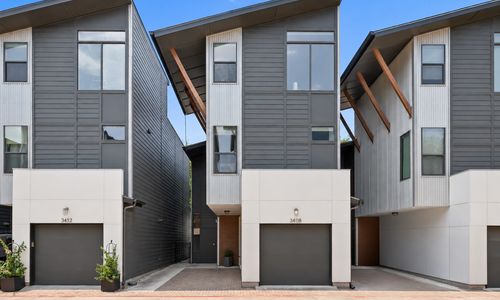
New listing: a modern, gated detached condo in 78704 near South Congress wi…
Share My QR |
|
We firmly believe that the internet should be available and accessible to anyone, and are committed to providing a website that is accessible to the widest possible audience, regardless of circumstance and ability.
To fulfill this, we aim to adhere as strictly as possible to the World Wide Web Consortium’s (W3C) Web Content Accessibility Guidelines 2.1 (WCAG 2.1) at the AA level. These guidelines explain how to make web content accessible to people with a wide array of disabilities. Complying with those guidelines helps us ensure that the website is accessible to all people: blind people, people with motor impairments, visual impairment, cognitive disabilities, and more.
This website utilizes various technologies that are meant to make it as accessible as possible at all times. We utilize an accessibility interface that allows persons with specific disabilities to adjust the website’s UI (user interface) and design it to their personal needs.
Additionally, the website utilizes an AI-based application that runs in the background and optimizes its accessibility level constantly. This application remediates the website’s HTML, adapts Its functionality and behavior for screen-readers used by the blind users, and for keyboard functions used by individuals with motor impairments.
If you’ve found a malfunction or have ideas for improvement, we’ll be happy to hear from you. You can reach out to the website’s operators by using the following email [email protected]
Our website implements the ARIA attributes (Accessible Rich Internet Applications) technique, alongside various different behavioral changes, to ensure blind users visiting with screen-readers are able to read, comprehend, and enjoy the website’s functions. As soon as a user with a screen-reader enters your site, they immediately receive a prompt to enter the Screen-Reader Profile so they can browse and operate your site effectively. Here’s how our website covers some of the most important screen-reader requirements, alongside console screenshots of code examples:
Screen-reader optimization: we run a background process that learns the website’s components from top to bottom, to ensure ongoing compliance even when updating the website. In this process, we provide screen-readers with meaningful data using the ARIA set of attributes. For example, we provide accurate form labels; descriptions for actionable icons (social media icons, search icons, cart icons, etc.); validation guidance for form inputs; element roles such as buttons, menus, modal dialogues (popups), and others. Additionally, the background process scans all of the website’s images and provides an accurate and meaningful image-object-recognition-based description as an ALT (alternate text) tag for images that are not described. It will also extract texts that are embedded within the image, using an OCR (optical character recognition) technology. To turn on screen-reader adjustments at any time, users need only to press the Alt+1 keyboard combination. Screen-reader users also get automatic announcements to turn the Screen-reader mode on as soon as they enter the website.
These adjustments are compatible with all popular screen readers, including JAWS and NVDA.
Keyboard navigation optimization: The background process also adjusts the website’s HTML, and adds various behaviors using JavaScript code to make the website operable by the keyboard. This includes the ability to navigate the website using the Tab and Shift+Tab keys, operate dropdowns with the arrow keys, close them with Esc, trigger buttons and links using the Enter key, navigate between radio and checkbox elements using the arrow keys, and fill them in with the Spacebar or Enter key.Additionally, keyboard users will find quick-navigation and content-skip menus, available at any time by clicking Alt+1, or as the first elements of the site while navigating with the keyboard. The background process also handles triggered popups by moving the keyboard focus towards them as soon as they appear, and not allow the focus drift outside of it.
Users can also use shortcuts such as “M” (menus), “H” (headings), “F” (forms), “B” (buttons), and “G” (graphics) to jump to specific elements.
We aim to support the widest array of browsers and assistive technologies as possible, so our users can choose the best fitting tools for them, with as few limitations as possible. Therefore, we have worked very hard to be able to support all major systems that comprise over 95% of the user market share including Google Chrome, Mozilla Firefox, Apple Safari, Opera and Microsoft Edge, JAWS and NVDA (screen readers), both for Windows and for MAC users.
Despite our very best efforts to allow anybody to adjust the website to their needs, there may still be pages or sections that are not fully accessible, are in the process of becoming accessible, or are lacking an adequate technological solution to make them accessible. Still, we are continually improving our accessibility, adding, updating and improving its options and features, and developing and adopting new technologies. All this is meant to reach the optimal level of accessibility, following technological advancements. For any assistance, please reach out to [email protected]